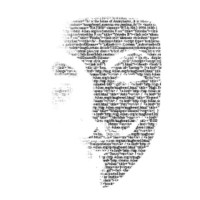
A dangerous mindset is present with many people in the world today:
“There is no real harm from a large scale invasion of privacy because only people who are engaged in bad acts have a reason to want to hide and to care about their privacy.”
This is grounded on the view that there is only two kind of people in the world: good people and bad people. Bad people are those who engage in terrorism or other crimes and therefore have reasons to want to hide what they are doing.
Good people are doing nothing wrong and hence have nothing to hide and no reason to fear the government monitoring them.
People who argue this are engaged in a very extreme act of self-deprecation. What they are really saying is “I have agreed to make myself such a harmless and unthreatening and uninteresting person that I actually don’t fear having the government know what it is that I’m doing.”
Eric Schmidt, Google CEO, 2009: If you are doing something that you don’t want other people to know, maybe you shouldn’t be doing it in the first place.”
The people who say that don’t actually believe it. While they say with their words that privacy doesn’t matter, with their actions they take all kind of steps to safeguard their privacy. They put passwords on their email and their social media accounts, they put locks on their bedroom and bathroom doors. These are all steps designed to prevent others from entering what they consider their private realm and knowing what it is that they don’t want others to know.
Incidentally (or rather ironically), Eric Schmidt ordered his employees to cease speaking to CNET after the online magazine published an article full of personal, private information about Eric Schmidt, all of which it obtained exclusively through Google searches and other Google products.
Mark Zuckerberg, 2010: “Privacy is no longer a social norm.” Shortly after, he and his wife not only purchased their own house but also all four adjacent houses in Palo Alto for a total of 30 million dollars in order to ensure that they enjoy a zone of privacy.
If someone ever tells you that privacy doesn’t matter, do a simple test: ask them to hand over all their emails and passwords for you to snoop around in. After all, they claim they have nothing to hide!
All of us have things to hide, not just terrorists and criminals. There are certain things you tell your doctor, your best friend, your lawyer or your spouse, but you would be mortified if the rest of the world found out about them. Every day we make judgements that we want others to know, as well as judgements that we certainly do not want to share with anyone!
The reason privacy is so universally and instinctively craved is that when we are in a state where we can be monitored, our behaviour changes dramatically.
The range of behavioural options that we consider when we think we are being watched is severely reduced.
When somebody knows that they might be being watched, their behaviour is vastly more conformist and compliant.
Human shame is a very powerful motivator, as is the desire to avoid it. That is the reason why people when they are in a state of being watched, make decisions, not that are the byproduct of their own agency, but that are about the expectations that others have of them or the mandates of societal orthodoxy.
The best example of exploiting this is by the 18th-century philosopher Jeremy Bentham. In his age for the first time, institutions had become so large and centralised that they could no longer monitor and therefore control each one of their individual members.
His solution was an architectural design originally intended to be implemented in prisons, that he called the “Panopticon” (https://en.wikipedia.org/wiki/Panopticon).
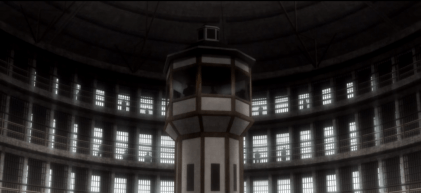
The primary attribute of which is the construction of an enormous tower in the centre of the institution. From within this tower, you could at any moment watch any of the inmates, although you couldn’t watch all of them at all times. Crucial to this design was that the inmates could not actually see into the tower, so they never knew if or even when they were being watched.
The exciting thing about this design is that the prisoners have to assume that they are being watched at any given moment, which is the ultimate enforcer for obedience and compliance.
Rather than using overt weapons of tyranny like violence, intimidation and imprisonment of dissidents, mass surveillance creates a prison in the mind, which is a more subtle, though much more effective means of fostering compliance with social norms and social orthodoxy, much more effective than brute force can ever be.
George Orwell, 1984, through his narrator Winston Smith: “There was, of cause, no way of knowing whether you were being watched at any given moment. (…) at any rate, they could plug in your wire whenever they wanted to. You had to live, did live, from habit, that became instinct, in the assumption that every sound you made was overheard and except in darkness every movement was scrutinised.”
Religions very much work the same way. There is an invisible, all-knowing authority that, because of its omniscience always watches whatever you are doing, which means you never have a private moment.
The conclusion is that a society, in which people can be monitored at all times is a society that breeds conformity and obedience and submission, which is why every tyrant craves that system.
That is why it is so important to have a realm of privacy to go to think and reason without the judgemental eyes of others being cast upon us, in which creativity and exploration and dissent exclusively reside.
Lastly, the mindset “only people who are doing something wrong have things to hide and therefore reasons to care about privacy,” entrenches two very destructive messages.
1) The only people who care about privacy are by definition, bad people.
The problem with this is that when you say “somebody is doing something bad” you mean this like plotting terrorist attacks, a very narrow definition. For people who wield power, however, “bad things” are actions that pose meaningful challenges to the exercise of their own power, a much broader definition.
2) There is an implicit bargain: if you are willing to render yourself sufficiently harmless, unthreatening to those who wield political power, then and only then can you be free of the dangers of surveillance. Only those who are dissidents, who challenge power who have something to worry about.
You might be a person who right now does not want to engage in that sort of behaviour, but at some point in the future, you might. And even if you decide that you never will never want to, the fact that there are people that are willing and able to resist and be adversarial to those in power, dissidents, activists, journalist and many others is something that brings us all a collective good that we should want to preserve.
The measure how free a society is, is not how well it treats its good, obedient, compliant citizens, but how it treats its dissidents and those who resist orthodoxy.
A system of mass surveillance suppresses our own freedom on all sorts of ways. it renders off-limit all kinds of behavioural choices without our even knowing that it has happened.
Rosa Luxemburg: “He who does not move, does not notice his chains”.
We can try and render the chains of mass surveillance invisible or undetectable, but the constraints that it imposes on us do not become any less potent.
This piece is mainly based on a speech by Glenn Greenwald: Why privacy matters (TED Talks) (https://www.youtube.com/watch?v=pcSlowAhvUk)

